Telework vs. Office Work: Navigating Your Best Fit in 2025
The way we work has permanently shifted since 2020. Today’s professionals juggle face-to-face collaboration, fully remote roles, and hybrid models as organizations refine long-term strategies. Whether you’re an employee choosing where to thrive, an employer designing policies, or a job seeker evaluating opportunities, understanding the pros and cons of telework and office work will guide your decisions.
The Evolving Workplace in 2025
Post-pandemic trends have reshaped work:
- Hybrid roles, offered by nearly four in ten Canadian employers, balance remote days with in-office collaboration.
- Flexible schedules attract top talent, with more than one-third of companies advertising adaptable hours.
- Remote job postings have surged 200 percent since before 2020, and over four in five workers now expect some form of flexibility.
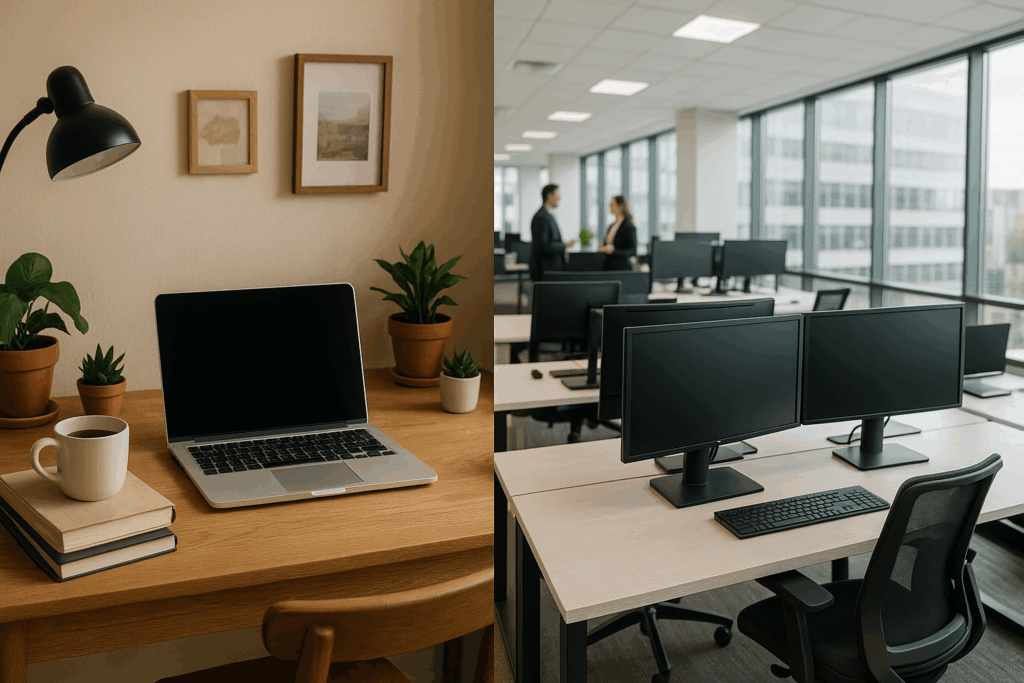
These shifts give rise to four primary work models: the traditional office with fixed schedules and on-site teamwork; pure remote work with location independence; hybrid arrangements blending both; and flexible models that empower employees to choose by task or project.
Why Telework Appeals
Work-Life Harmony. No commute means reclaiming one to three hours daily. Flexible hours let you care for family and manage personal tasks without sacrificing your career. Reduced stress from traffic and office politics translates into higher job satisfaction.
Financial Upside. Eliminating travel expenses can save $2,000–$5,000 a year. You’ll spend less on professional attire, daily lunches, and coffee runs. Hidden savings—from lower dry-cleaning bills to reduced vehicle wear—add up quickly.
Global Opportunities. Free from geographic constraints, you can work for any company worldwide. Employers tap a broader talent pool, and you benefit from metropolitan salaries while living in more affordable regions. International experience becomes routine.
Increased Focus. Customizing your home workspace—optimizing lighting, ergonomics, and noise control—lets you concentrate without office interruptions. Studies show 67 percent of remote workers report higher productivity when working from home.
Environmental Impact. Every day spent at home reduces commuting emissions, lowers office energy consumption, and cuts paper usage. Less traffic also means cleaner air and less urban congestion.
Telework’s Hidden Drawbacks
Social Isolation. Without casual “water-cooler” chats, building relationships and trust can be harder. Junior employees miss out on informal mentoring, and prolonged isolation can erode engagement and drive turnover.
Collaboration Hurdles. Video-call fatigue, time-zone challenges, and miscommunications in text-based chats can hamper teamwork. Spontaneous brainstorming sessions—often the birthplace of innovation—are harder to replicate virtually.
Home Distractions. Family interruptions, household chores, and blurred personal–professional boundaries can disrupt focus. Not everyone has the luxury of a dedicated home office.
Career Stagnation Risks. Remote employees may lose visibility with leadership, limiting mentoring and networking. Observing senior colleagues in person and seizing promotion opportunities can prove more challenging.
The Power of the Office
Creative Collaboration. In-person interactions spark serendipitous ideas. Quick hallway conversations and whiteboard sessions accelerate problem-solving and strengthen team bonds.
Clear Structure. Defined hours and on-site environments help separate work from home. Immediate access to specialized equipment, meeting rooms, and IT support keeps projects on track.
Mentorship and Development. Face-to-face coaching fosters faster learning. Being visible to senior leaders and attending in-house training events kickstarts career growth.
Cultural Connection. Shared office rituals—from team lunches to monthly all-hands—reinforce company values and create a palpable sense of belonging.
Structured Learning. Observing peers and experts in real time, joining spontaneous cross-departmental discussions, and participating in on-site workshops enrich professional development.
However, offices come with their own drawbacks: long commutes, fixed schedules that limit personal time, frequent interruptions, office politics, and higher expenses for travel, meals, and professional attire.
Hybrid: Combining the Best of Both Worlds
Increasingly, organizations adopt hybrid models—such as a three-days-in, two-days-remote split or designated “core” office days—to blend flexibility with connection. Success relies on clear communication about availability, investment in collaboration tools, and results-oriented management rather than mere presence.
Choosing What Works for You
Your ideal arrangement depends on personal preferences, career stage, and industry norms. Early-career professionals often benefit from in-office mentorship, while mid-career employees find hybrid models optimal for balancing life and growth. Senior leaders may favor remote work for autonomy.
When negotiating your work setup, prepare by documenting your productivity in different environments, proposing trial periods, and offering clear schedules and collaboration protocols. Emphasize results, not just location.
Skills for Any Environment
Whether remote, on-site, or hybrid, success hinges on mastering:
- Digital communication and collaboration tools
- Self-management and discipline
- Cultural intelligence for diverse teams
- Adaptability and resilience
- Effective time- and task-management
Employers who offer flexible work arrangements report lower turnover, higher satisfaction, larger candidate pools, and reduced overhead. Organizations that master hybrid strategies attract the best talent, and professionals who thrive in any setting secure the greatest career opportunities.
Looking Ahead
As we move toward 2030, expect virtual reality collaboration rooms, AI-powered scheduling assistants, and advanced “smart” workplaces. But the core principle remains: work should serve your life goals, not constrain them. By understanding the advantages and trade-offs of each work model, you can craft a sustainable, fulfilling professional experience—wherever you choose to work.