
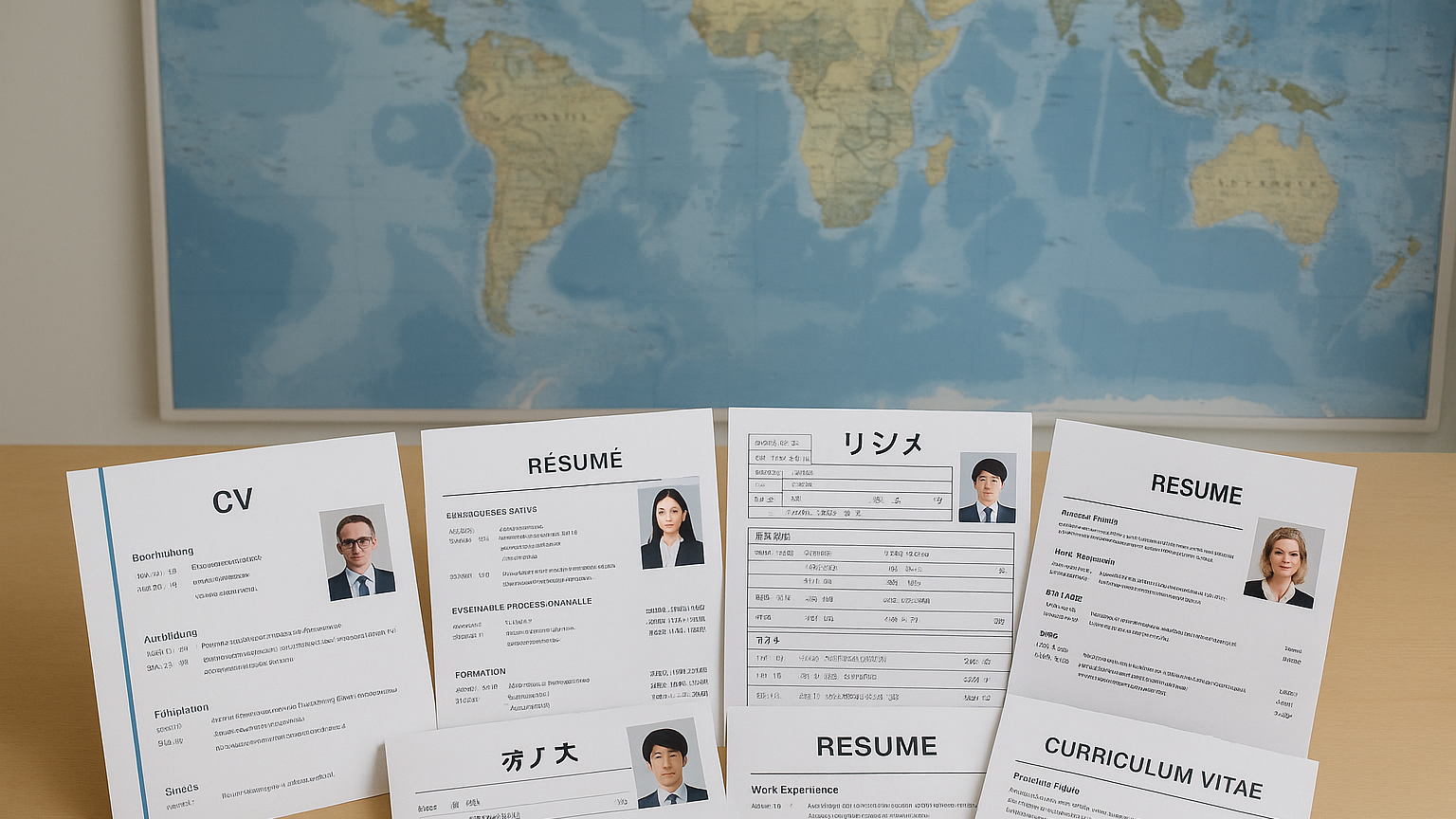
Creating a resume that works across international markets requires more than translation—it demands cultural intelligence, strategic positioning, and an understanding of diverse hiring practices. In 2025’s globalized job market, professionals who master international resume writing gain access to opportunities worldwide, while those who rely on one-size-fits-all approaches often find themselves overlooked despite strong qualifications.
Having reviewed thousands of international resumes and worked with hiring managers across multiple continents, I’ve seen how small cultural missteps can derail promising candidacies, while culturally aware candidates often land interviews despite facing intense competition. The key lies in understanding that effective international resumes balance universal professional standards with local expectations and cultural nuances.
Understanding Global Resume Variations
The American Standard: Achievement-Focused Brevity
American resumes prioritize conciseness, quantifiable achievements, and personal branding. They typically span 1-2 pages and focus heavily on measurable results rather than detailed job descriptions.
Key characteristics:
- Strong action verbs opening each bullet point
- Quantified achievements with specific metrics
- Skills-based sections highlighting relevant competencies
- Professional summary replacing objective statements
- No personal information beyond contact details
American hiring managers expect resumes to answer “What did you accomplish?” rather than “What were your responsibilities?” This achievement-focused approach has influenced international standards but isn’t universally adopted.
The European Approach: Comprehensive Professional Profiles
European CVs tend to be longer and more detailed than American resumes, often including personal information that would be considered inappropriate in other markets.
Common European CV elements:
- Professional photograph (standard in Germany, Austria, and Switzerland)
- Date of birth and nationality
- Detailed educational background including grades
- Comprehensive work history with detailed descriptions
- Language proficiency levels using the Common European Framework
- Personal interests and hobbies
The European Union has worked to standardize CV formats through the Europass initiative, but significant variation still exists between countries.
The British Balance: Professional Formality with Personal Touch
British CVs occupy middle ground between American brevity and continental European detail. They’re typically 2-3 pages and include more personal information than American resumes while maintaining professional focus.
British CV characteristics:
- Personal statement replacing American-style summaries
- Detailed employment history with both responsibilities and achievements
- Education section including A-levels and GCSEs for recent graduates
- References section or “References available upon request”
- Professional but slightly more personal tone than American resumes
The Asian Professional Standard: Hierarchical and Detailed
Asian markets, particularly Japan, South Korea, and parts of Southeast Asia, often expect highly detailed CVs that reflect hierarchical business cultures.
Asian CV expectations:
- Detailed educational background including institution rankings
- Clear progression through organizational hierarchies
- Group achievements and team contributions
- Formal language and respectful tone
- Sometimes including family status and personal background
Crafting Your Global Professional Brand
Developing Cultural Intelligence
Before adapting your resume for specific markets, develop understanding of underlying cultural values that influence hiring decisions.
Individualistic vs. Collectivistic Cultures:
- Individualistic cultures (US, UK, Australia) emphasize personal achievements and individual contributions
- Collectivistic cultures (Japan, South Korea, many parts of Asia and Africa) value team harmony and group success
Power Distance Considerations:
- High power distance cultures expect clear hierarchical positioning and respect for authority
- Low power distance cultures appreciate egalitarian approaches and direct communication
Uncertainty Avoidance:
- Cultures with high uncertainty avoidance prefer detailed information and comprehensive documentation
- Low uncertainty avoidance cultures are comfortable with ambiguity and brief, focused presentations
Long-term vs. Short-term Orientation:
- Long-term oriented cultures value patience, persistence, and gradual career development
- Short-term oriented cultures appreciate quick wins and immediate impact
Strategic Content Development
Universal Professional Elements
Regardless of cultural destination, certain elements strengthen any international resume:
Clear Contact Information:
- Professional email address (avoid nicknames or unprofessional handles)
- International phone number format with country codes
- LinkedIn profile URL
- Location (city/country) without full address
- Professional website or portfolio if relevant
Strong Professional Summary:
Write a compelling 3-4 sentence summary that works across cultures:
- Lead with your core professional identity
- Highlight years of experience in specific fields
- Mention key skills or specializations
- Include language capabilities if relevant for the role
Quantified Achievements:
Numbers translate across all cultures and provide objective evidence of capability:
- Revenue generated or cost savings achieved
- Team sizes managed or projects led
- Percentage improvements in efficiency, sales, or performance metrics
- Budget responsibility or financial impact
- Geographic scope of responsibilities
Technical and Language Skills:
Create clear, honest assessments of your capabilities:
- Programming languages, software, or technical platforms
- Language proficiency using recognized scales (CEFR for European markets, TOEFL/IELTS scores)
- Industry-specific certifications
- Professional development and continuing education
Market-Specific Adaptations
Adapting for European Markets
When targeting European opportunities, consider these adaptations:
German-Speaking Countries (Germany, Austria, Switzerland):
- Include a professional photograph
- List educational achievements with grades (German grading system if applicable)
- Provide detailed job descriptions alongside achievements
- Include mandatory military service if applicable
- Use formal language and avoid overly aggressive self-promotion
Nordic Countries (Sweden, Norway, Denmark, Finland):
- Emphasize work-life balance and sustainable practices
- Highlight collaborative achievements and team contributions
- Include volunteer work and community involvement
- Use modest tone while still demonstrating competence
- Mention language skills prominently
France:
- Write a detailed cover letter (lettre de motivation) as equally important as the CV
- Include educational background in detail, particularly prestigious institutions
- Use formal French business language
- Include personal interests that demonstrate cultural sophistication
- Highlight international experience and language capabilities
Targeting North American Markets
United States:
- Focus heavily on measurable achievements and ROI
- Use strong action verbs and confident language
- Keep to 1-2 pages maximum
- Avoid personal information (age, photo, marital status)
- Highlight leadership and individual contributions
- Include volunteer work that demonstrates character and skills
Canada:
- Balance American achievement focus with British formality
- Include French language skills if targeting Quebec or bilingual positions
- Highlight multicultural experience and adaptability
- Include volunteer work and community involvement
- Mention immigration status clearly (citizen, permanent resident, work permit)
Optimizing for Asian Markets
Japan:
- Include detailed educational background with institution names and rankings
- Show clear career progression and loyalty to employers
- Emphasize group achievements and team harmony
- Use formal, respectful language throughout
- Consider including brief personal background if culturally appropriate
Singapore/Hong Kong:
- Highlight international experience and cross-cultural competency
- Include language skills prominently (particularly Mandarin, Cantonese, Malay)
- Balance Western achievement focus with Asian relationship emphasis
- Include relevant professional certifications
- Mention comfort with multicultural environments
China:
- Provide detailed company information for international employers unfamiliar to local market
- Highlight relationships and network connections where appropriate
- Include educational background with specific institution names
- Show understanding of local business practices and culture
- Mention any experience with Chinese markets or language skills
Technical Optimization for International Distribution
ATS-Friendly International Formatting
Applicant Tracking Systems (ATS) are used globally, but formatting preferences vary:
Universal ATS Guidelines:
- Use standard fonts (Arial, Times New Roman, Calibri)
- Avoid tables, text boxes, and complex formatting
- Use standard section headings (Experience, Education, Skills)
- Include keywords from job descriptions naturally
- Save in multiple formats (.docx and .pdf)
Cultural Formatting Considerations:
- European markets often prefer more elaborate designs
- American ATS systems prioritize clean, simple formatting
- Some Asian markets still expect hand-delivered or emailed resumes with more flexible formatting
Language and Translation Strategy
Professional Translation vs. Adaptation:
Simple translation rarely suffices for international resumes. Instead, focus on cultural adaptation:
- Understand industry terminology in the target language and culture
- Adapt achievement descriptions to local business contexts
- Ensure metric systems match local preferences (metric vs. imperial)
- Use appropriate currency formats and business terminology
- Have native speakers review for cultural appropriateness
Multilingual Resume Strategy:
For truly international roles, consider creating resumes in multiple languages:
- Lead with the primary business language of the target market
- Include language skills prominently
- Ensure consistent information across all versions
- Adapt cultural elements while maintaining core professional brand
Digital Portfolio Integration
Global LinkedIn Optimization
LinkedIn serves as your global professional presence and should complement your resume strategy:
International LinkedIn Best Practices:
- Use professional headshots appropriate for your target markets
- Write summaries that work across cultures while highlighting international experience
- Include experience in multiple languages if relevant
- Showcase recommendations from diverse geographic and cultural backgrounds
- Join industry groups in your target markets
Portfolio Considerations by Industry:
Creative Professionals:
- Ensure portfolio websites load quickly in target countries
- Consider cultural aesthetics and color preferences
- Include projects that demonstrate cross-cultural competency
- Use appropriate image formats and file sizes for international bandwidth variations
Technical Professionals:
- Host code repositories on platforms popular in target markets (GitHub globally, but regional preferences exist)
- Document technical projects with international scope and impact
- Include experience with technologies and platforms used in target markets
- Highlight collaboration with international teams
Avoiding Common International Resume Mistakes
Cultural Missteps That Derail Applications:
Overly Aggressive Self-Promotion:
While confidence is valued in American markets, it can backfire in cultures that prioritize humility and team contribution.
Inappropriate Personal Information:
Including photos, age, or marital status in markets where it’s not expected (like the US) can create legal concerns for employers.
Ignoring Local Educational Systems:
Failing to explain international credentials or provide local equivalencies makes it difficult for hiring managers to assess qualifications.
Currency and Date Format Errors:
Using incorrect date formats (MM/DD/YYYY vs. DD/MM/YYYY) or currency symbols creates confusion and suggests cultural insensitivity.
Language Level Misrepresentation:
Overstating language abilities leads to awkward interview situations and damaged credibility.
Future-Proofing Your International Resume Strategy
Emerging Global Hiring Trends:
Skills-Based Hiring:
International employers increasingly prioritize demonstrated skills over formal credentials, making skills sections more critical.
Remote-First Positions:
Global remote opportunities require resumes that showcase virtual collaboration and cross-cultural communication skills.
Sustainability and Social Responsibility:
International companies increasingly value candidates with demonstrated commitment to sustainability and social responsibility.
Digital Collaboration:
Highlight experience with international project management tools and virtual team leadership.
Quality Assurance and Testing
Professional Review Process:
Before submitting international applications, implement a comprehensive review process:
Cultural Review:
Have native speakers or cultural experts review for appropriateness and effectiveness.
Technical Review:
Test resume formatting across different systems and devices used in target markets.
Content Review:
Verify all dates, company names, and achievement metrics for accuracy.
Language Review:
Ensure grammar, spelling, and terminology are appropriate for the target market.
Conclusion: Your Gateway to Global Opportunities
An effectively crafted international resume serves as more than a job application document—it’s your introduction to global career opportunities and your first demonstration of cultural intelligence. In 2025’s interconnected job market, professionals who master international resume writing gain significant competitive advantages over those who rely on single-format approaches.
Success in international resume writing requires balancing universal professional standards with cultural sensitivity and market-specific expectations. The investment in understanding these nuances pays dividends throughout your career as you gain access to opportunities that would otherwise remain closed.
Remember that your resume is often the first impression international employers have of your cultural adaptability and professional competence. By demonstrating cultural intelligence in your resume presentation, you signal your ability to thrive in diverse professional environments—a quality increasingly valued by global employers.
The future of work is increasingly international, and professionals who develop skills in cross-cultural communication and presentation will find themselves best positioned for global career opportunities. Your international resume isn’t just about landing your next job—it’s about building a career that transcends geographic boundaries and cultural limitations.
At TowardJobs, we specialize in helping professionals create compelling international resumes that open doors to global opportunities. Our cultural expertise and international hiring insights help candidates present their qualifications effectively across diverse markets and cultural contexts.